It's been a strange couple of weeks in the world of copyright.
First off:
"Nearly two dozen Republican lawmakers wrote to Disney CEO Bob Chapek last month, declaring their opposition to renewing the company's copyright on Mickey Mouse, which is set to expire in 2024. The lawmakers noted in their letter that ‘the Constitution gives Congress the authority to determine the length of time to protect copyrights. Further, it explicitly states that copyrights may not be permanent. Yet Disney's long history of lobbying on this issue suggests that is its goal.'"[ref]Hawley introduces bill to strip 'woke' Disney of special copyright protections[/ref]
The problem is, I know of no such proposal, or even hints of such a proposal, from Disney or anyone else. I'm in regular contact with the folks at the Copyright Alliance. If something were in the works, they'd know about it, and so would I. There are no such proposals, much less an actual bill. And believe me, if they had intended to do so, they would have already started.
As reported by the HuffPost:
"James Grimmelmann, an intellectual property expert at Cornell Law School, described opposition to Disney's copyrights as ‘harmless grandstanding' against something that's not even happening.
‘There is no political coalition pushing strongly for further extensions; the sky did not fall on the copyright industries when works from the 1920s started entering the public domain again,' Grimmelmann said in an email. ‘Being against copyright extension is like being against Prohibition. Nobody's out there campaigning hard to bring it back. The Mouse doesn't care.'"[ref]Josh Hawley jumps on anti-Disney bandwagon with copyright bill[/ref]
I stated way back in 2014, and many times since on this blog, that Mickey (or at least Steamboat Willie) will go into the public domain on January 1, 2024, and there will be no proposals to extend copyright terms further.[ref]Mickey's Headed to the Public Domain! But Will He Go Quietly?[/ref] The sound policy reasons for extending copyrights in 1998, namely to bring them on a par with Europe, are no longer present and nothing has changed.
Next up, Senator Josh Hawley, who supposedly clerked for Supreme Court Justice John Roberts and taught Constitutional Law,[ref]Wikipedia - Josh Hawley[/ref] filed this doozy of a bill[ref]Hawley - A Bill to address the duration of copyright, and for other purposes[/ref] the "Copyright Clause Restoration Act of 2022." The bill proposes two major changes: 1) limiting copyright terms going forward to two 28 year terms, which will require the filing of a renewal request and 2) making these change retroactive to certain companies which qualify.
To which Prof. Paul Goldstein, an intellectual property expert at Stanford Law School immediately blasted as "blatantly unconstitutional."[ref]Sen. Josh Hawley's Move to Strip Disney's Copyrights Called 'Blatantly Unconstitutional'[/ref]
Why is this being proposed? According to an interview Hawley gave to Fox News:
"The age of Republican handouts to Big Business is over. Thanks to special copyright protections from Congress, woke corporations like Disney have earned billions while increasingly pandering to woke activists. It's time to take away Disney's special privileges and open up a new era of creativity and innovation."[ref]Hawley introduces bill to strip 'woke' Disney of special copyright protections[/ref]
Please. Copyrights are not "special privileges." Copyrights are Constitutional rights enumerated in Article 1 Section 8 of the Constitution.[ref]Article 1 Legislative Branch Section 8 Powers of Congress[/ref] Surely a Constitutional Law professor would know that.
Also, Disney's copyrights are not "special copyright protections." Their copyrights last just as long as every other copyright holder. No more, no less.
Which is exactly what this bill seeks to change and is clearly in retaliation for the Disney company taking a political position of which Hawley disagrees. Has he read the 1st amendment?
"Official reprisal for protected speech ‘offends the Constitution [because] it threatens to inhibit exercise of the protected right,' (citation omitted), and the law is settled that as a general matter the First Amendment prohibits government officials from subjecting an individual to retaliatory actions,… for speaking out."[ref]Hartman v. Moore 547 U.S. 250 (2006)[/ref]
But first things first. Reducing current copyright terms is simply bad policy.
The United State is signatory to multiple treaties which mandate minimum copyright terms far in excess of Hawley's bill.
- Berne Treaty (ratified 1988)
- Trade Related Aspects of Intellectual Property Rights (TRIPS signed 1994)
- USMCA (United States-Mexico-Canada Agreement effective July 1, 2020)
- Must have a market capitalization in excess of $150 billion; AND
- "Is classified under North American Classification System Code 5121 or 71"
- Apple
- Microsoft
- Alphabet (Google)
- Amazon (MGM)
- Meta (Facebook)
- Tencent
- Walt Disney
- Oracle
- Adobe
- Comcast (NBC)
- Amazon (MGM)
- Walt Disney
- Comcast (NBC)
- Constitutes an unlawful retaliation for protected 1st Amendment speech
- Constitutes a Bill of Attainder
- Constitutes an unlawful taking of property in violation of the 5th Amendment, and probably
- Violates the equal protection clause of the 14th
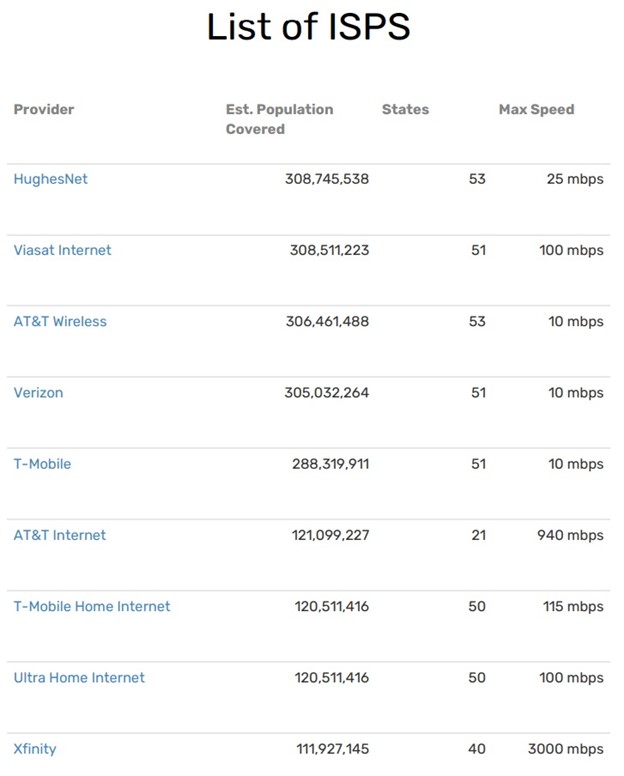 Next up in the Court's order are:
"[T]hird parties providing services used in connection with Defendants' operations -- including, without limitation, ISPs, web hosting providers, CDN service providers, DNS service providers, VPN service providers, domain name purchasing service, domain names privacy service, back-end service providers, affiliate program providers, web designers, shippers, search-based online advertising services (such as through-paid inclusion, paid search results, sponsored search results, sponsored links, and Internet keyword advertising), any banks, savings and loan associations, merchant account providers, payment processors and providers, credit card associations, or other financial institutions, including without limitation, PayPal, and any other service provider which has provided services or in the future provides services to Defendants and/or the infringing Website (including without limitation those set forth in the list annexed and made Exhibit C annexed hereto) (each, a "Third Party Service Provider") -- having knowledge of this Order by service, actual notice or otherwise be and are hereby permanently enjoined from providing services to the Website (through any of the domain names set forth in Exhibit A hereto or at any Newly-Detected Websites."[ref]Id. at 7 (emphasis added)[/ref]
Those entities specifically mentioned by the Court are:
Google
Mycloud.my
Facebook
Name.com
Cloudflare
Visa
Mastercard
Roku
Apple App Store
Amazon.com App Store
Joel A. Boyle
Jewella Privacy Service, Inc.Namecheap, Inc.Vocalnet.co.UK
Wow. That's some order.
What's behind this is that any Court that issues an injunction also has the authority on those parties who may be in "active concert or participation" in assisting the subject of an injunction to avoid or hinder enforcement of the injunction. Something that, in the past, has put companies like Cloudflare on the hotseat with the Judges overseeing the case.
"There is no real dispute that CloudFlare had knowledge of the TRO at least as of May 14, 2015 and that it subsequently permitted an anonymous user to establish a free account that configured the domain name… to use CloudFlare's services. CloudFlare's authoritative domain name server translates [the domain name] as entered in a search browser into the correct IP address associated with that site, thus allowing the user to connect to the site. Connecting internet users to [the domain name] in this manner benefits Defendants and quite fundamentally assists them in violating the injunction because, without it, users would not be able to connect to Defendants' site unless they knew the specific IP address for the site. Beyond the authoritative domain name server, CloudFlare also provides additional services that it describes as improving the performance of the [infringing] site… Going forward, however, CloudFlare is now aware that it is bound by the injunction so any future failure to comply might expose it to a contempt finding that could result in the award of attorney's fees or other consequences."[ref]
Next up in the Court's order are:
"[T]hird parties providing services used in connection with Defendants' operations -- including, without limitation, ISPs, web hosting providers, CDN service providers, DNS service providers, VPN service providers, domain name purchasing service, domain names privacy service, back-end service providers, affiliate program providers, web designers, shippers, search-based online advertising services (such as through-paid inclusion, paid search results, sponsored search results, sponsored links, and Internet keyword advertising), any banks, savings and loan associations, merchant account providers, payment processors and providers, credit card associations, or other financial institutions, including without limitation, PayPal, and any other service provider which has provided services or in the future provides services to Defendants and/or the infringing Website (including without limitation those set forth in the list annexed and made Exhibit C annexed hereto) (each, a "Third Party Service Provider") -- having knowledge of this Order by service, actual notice or otherwise be and are hereby permanently enjoined from providing services to the Website (through any of the domain names set forth in Exhibit A hereto or at any Newly-Detected Websites."[ref]Id. at 7 (emphasis added)[/ref]
Those entities specifically mentioned by the Court are:
Google
Mycloud.my
Facebook
Name.com
Cloudflare
Visa
Mastercard
Roku
Apple App Store
Amazon.com App Store
Joel A. Boyle
Jewella Privacy Service, Inc.Namecheap, Inc.Vocalnet.co.UK
Wow. That's some order.
What's behind this is that any Court that issues an injunction also has the authority on those parties who may be in "active concert or participation" in assisting the subject of an injunction to avoid or hinder enforcement of the injunction. Something that, in the past, has put companies like Cloudflare on the hotseat with the Judges overseeing the case.
"There is no real dispute that CloudFlare had knowledge of the TRO at least as of May 14, 2015 and that it subsequently permitted an anonymous user to establish a free account that configured the domain name… to use CloudFlare's services. CloudFlare's authoritative domain name server translates [the domain name] as entered in a search browser into the correct IP address associated with that site, thus allowing the user to connect to the site. Connecting internet users to [the domain name] in this manner benefits Defendants and quite fundamentally assists them in violating the injunction because, without it, users would not be able to connect to Defendants' site unless they knew the specific IP address for the site. Beyond the authoritative domain name server, CloudFlare also provides additional services that it describes as improving the performance of the [infringing] site… Going forward, however, CloudFlare is now aware that it is bound by the injunction so any future failure to comply might expose it to a contempt finding that could result in the award of attorney's fees or other consequences."[ref]